People looking for an apartment to buy or rent compare price, floor area and condo fees, and they want to understand how those fees have behaved over the past few years. Real estate specialists note that the 2026 buyer arrives better informed and checks average consumption and maintenance costs before deciding.
Water efficiency also shows up in industry surveys. A study by Abrainc (the Brazilian Association of Real Estate Developers) with Brain Inteligência Estratégica surveyed 14,000 Brazilians, and 56% said they would pay more for a property with rainwater reuse technology. The survey question was about water reuse, and it still shows that saving water weighs on the buyer's decision.
What a consumption history helps support
The condo fee gets an explanation. When each unit pays for what it consumes and only the common areas are shared, each resident's bill reflects their own use. Estimates published in the sector point to a 20% to 40% drop in water consumption after individual metering, depending on the condo.
Those who sell or rent bring a written argument. When the management company or the real estate agency asks for information about the condo, the condo manager (síndico) attaches the monthly consumption history of the building and its common areas, without rebuilding numbers from memory and without exposing residents' individual data.
The new building on the same street is born with metering. Law 13,312/2016, in force since July 2021, requires individual water metering in new condominiums. A buyer visiting a new development finds this as standard, and the older building tends to be compared with it.
Where does technology come in?
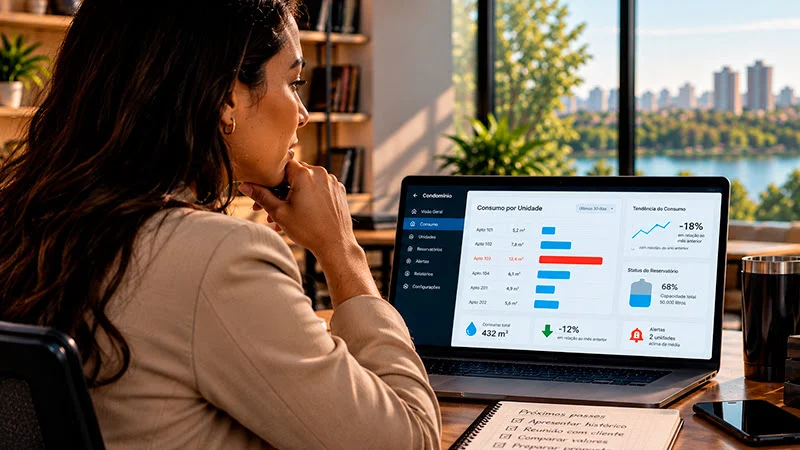
To show numbers to whoever asks, the condo needs individual metering with continuous readings, recorded month by month. With that history, the manager follows the consumption of each unit and of the common areas, notices when the pattern leaves the normal range, such as consumption that never stops or flow above what is expected, and explains the fee based on each month's record. That same history serves day-to-day management and the conversation with anyone evaluating the condo.
There is still no single appreciation percentage for condos that measure consumption, and the effect varies by city and property type. What the manager controls is what to bring to the table: a consumption history that is organized, up to date and ready to show to whoever asks. At the next residents' assembly, it is worth putting on the agenda which numbers the condo can present today to a buyer or a renter.
About the author
William Oliveira
Collaborates with Group Link One by writing about consumption management, the water crisis and technology applied to condominiums.